
1. How to Reduce ServiceNow Technical Debt with ServiceNow Integration Services India
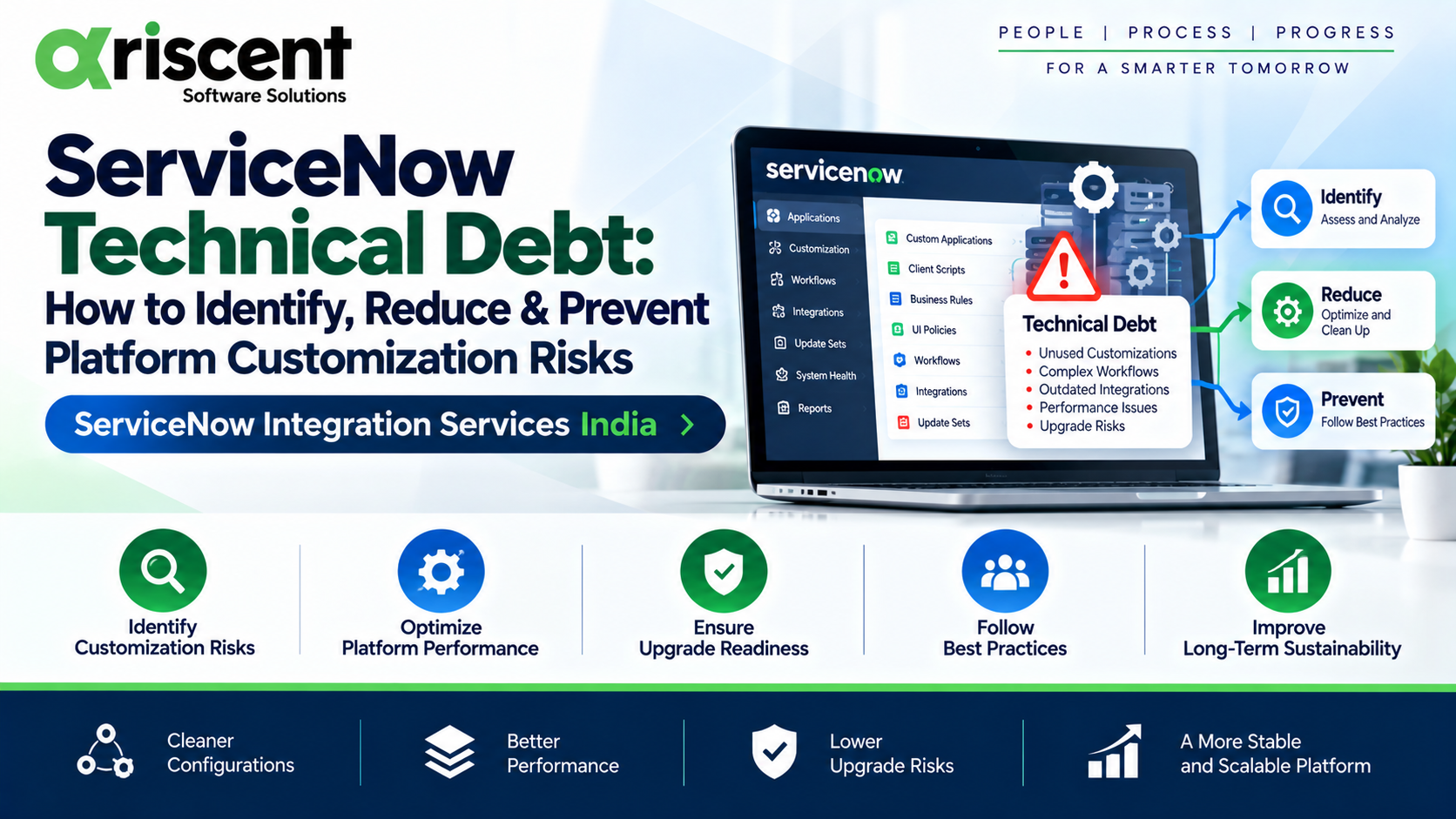
Reducing ServiceNow technical debt requires organizations to identify unnecessary customizations, outdated configurations, inefficient workflows, and unsupported integrations. ServiceNow Integration Services India can help review integration architectures, simplify interfaces, replace redundant custom solutions, and implement standardized integration patterns. Organizations should regularly assess custom scripts, business rules, workflows, applications, and integrations to identify components that may create upgrade or maintenance challenges. With ServiceNow Managed Services, teams can continuously monitor platform performance, manage upgrades, remove obsolete configurations, and maintain technical standards. ServiceNow Consulting can support technical debt assessments, customization governance, architecture reviews, and modernization roadmaps aligned with business requirements. Organizations should prioritize configuration over customization where possible, document exceptions, test changes thoroughly, and establish governance processes. These practices help reduce maintenance complexity and create a more scalable ServiceNow platform.
2. ServiceNow Customization Risks and ServiceNow Integration Services India
ServiceNow customizations can address unique business requirements, but excessive customization may increase maintenance effort, upgrade complexity, and integration risks. ServiceNow Integration Services India can help organizations design standardized integrations, reduce unnecessary custom code, and connect ServiceNow with enterprise applications using scalable approaches. For ServiceNow ITSM India, organizations should carefully evaluate custom workflows, business rules, scripts, and configurations before modifying core processes. With ServiceNow Managed Services Hyderabad, teams can monitor platform performance, manage upgrades, review customizations, and identify outdated components that may create technical debt. Organizations should prioritize configuration over customization where practical, document custom changes, establish governance standards, and conduct thorough testing before deployment. A structured customization strategy helps reduce operational risks, simplify future upgrades, improve maintainability, and support a more stable and scalable ServiceNow environment.
3. Identifying ServiceNow Technical Debt for ServiceNow Integration Services India
Identifying ServiceNow technical debt requires a systematic review of customizations, scripts, workflows, integrations, and configurations that may increase maintenance complexity. ServiceNow Integration Services India can help assess integration architectures, identify redundant interfaces, review custom APIs, and recommend standardized approaches. For ServiceNow ITOM Hyderabad, organizations should evaluate custom Discovery patterns, integrations, CMDB configurations, Event Management rules, and operational workflows that may affect platform stability or upgrades. During ServiceNow Implementation Hyderabad, teams should document customizations, assess their business value, identify outdated components, and prioritize remediation based on operational impact. Regular technical debt assessments, governance reviews, upgrade testing, and configuration analysis can help prevent unnecessary complexity. A structured approach enables organizations to simplify the ServiceNow environment, improve maintainability, reduce upgrade risks, and support scalable enterprise operations.
4. ServiceNow Technical Debt Management Best Practices for ServiceNow Integration Services India
ServiceNow technical debt management requires regular assessment of customizations, integrations, scripts, workflows, and configurations that may increase platform complexity. ServiceNow Integration Services India can help organizations review integration architectures, eliminate redundant interfaces, and adopt standardized integration patterns. For ServiceNow ITSM India, teams should assess custom business rules, workflows, scripts, and configurations that could complicate upgrades or maintenance. In ServiceNow ITOM India, organizations should review Discovery patterns, CMDB customizations, Event Management rules, integrations, and operational workflows for unnecessary complexity. Best practices include maintaining customization inventories, prioritizing remediation based on business impact, documenting exceptions, testing upgrades, and establishing governance standards. Regular technical debt reviews help organizations simplify their ServiceNow environment, improve maintainability, reduce upgrade risks, and support scalable platform operations.
5. Managing Platform Customizations with ServiceNow Integration Services India
Managing ServiceNow platform customizations requires careful governance to balance business requirements with maintainability and upgrade readiness. ServiceNow Integration Services India can help organizations design standardized integrations, reduce unnecessary custom code, and establish reusable integration patterns. ServiceNow Consulting Hyderabad can support customization assessments, architecture reviews, governance frameworks, and technical debt reduction strategies based on business requirements. During ServiceNow Implementation Hyderabad, teams should prioritize configuration over customization where possible, document all custom changes, evaluate their business value, and conduct thorough testing before deployment. Organizations should also maintain a customization inventory, review scripts and workflows regularly, and assess upgrade impacts. A structured customization management approach helps reduce technical complexity, improve platform stability, simplify future upgrades, and create a scalable ServiceNow environment aligned with evolving enterprise needs.
6. Reducing Customization Risks in ServiceNow Integration Services India Projects
Reducing customization risks in ServiceNow projects requires careful planning, governance, and continuous technical assessment. ServiceNow Integration Services India can help organizations design scalable integrations, minimize unnecessary custom code, and use standardized APIs and integration patterns. For ServiceNow ITOM, teams should review custom Discovery patterns, CMDB configurations, Service Mapping logic, Event Management rules, and integrations to identify potential upgrade or maintenance risks. ServiceNow Managed Services can provide ongoing platform monitoring, customization reviews, performance optimization, and technical debt management. Organizations should maintain a detailed customization inventory, document business justification, test changes thoroughly, and prioritize configuration over customization wherever practical. Regular architecture reviews and upgrade impact assessments can further reduce complexity. This structured approach helps maintain platform stability, simplify future upgrades, improve operational efficiency, and support long-term ServiceNow scalability.
7. Preventing ServiceNow Upgrade Risks with ServiceNow Integration Services India
Preventing ServiceNow upgrade risks requires proactive planning, customization reviews, testing, and strong platform governance. ServiceNow Integration Services India can help organizations assess integration dependencies, review custom APIs, identify outdated interfaces, and adopt upgrade-friendly integration patterns. For ServiceNow ITSM, teams should evaluate customized workflows, business rules, scripts, forms, and configurations that may create conflicts during platform upgrades. ServiceNow Managed Services can provide continuous monitoring, upgrade impact assessments, regression testing, performance reviews, and technical debt management. Organizations should maintain accurate documentation of customizations, validate integrations in non-production environments, and prioritize configuration over customization wherever practical. Regular health checks and governance reviews help identify potential issues before upgrades begin. This structured approach can simplify upgrade planning, reduce unexpected disruptions, improve platform stability, and support a sustainable ServiceNow environment for evolving business requirements.
8. ServiceNow Customization Governance and ServiceNow Integration Services India
ServiceNow customization governance helps organizations control platform changes while supporting business requirements, scalability, and upgrade readiness. ServiceNow Integration Services India can establish standardized integration patterns, review custom APIs, and reduce unnecessary custom development across enterprise systems. ServiceNow Managed Services can continuously monitor customizations, identify outdated configurations, assess technical debt, and support upgrade impact analysis. ServiceNow Consulting can define governance frameworks, approval processes, development standards, and architecture guidelines aligned with organizational objectives. Best practices include maintaining a customization inventory, documenting business justification, evaluating configuration before customization, conducting code reviews, and testing changes in non-production environments. Regular governance assessments help identify redundant workflows, scripts, integrations, and configurations that increase platform complexity. A structured governance approach improves maintainability, reduces upgrade risks, supports platform stability, and enables organizations to build a scalable ServiceNow environment for long-term business growth.
9. ServiceNow Technical Debt: Customization, Upgrades and ServiceNow Integration Services India
ServiceNow technical debt can increase when organizations rely heavily on customizations, outdated scripts, complex workflows, or unsupported integrations. ServiceNow Integration Services India can help organizations modernize integrations, replace redundant custom code, and implement standardized integration patterns that support easier upgrades. For ServiceNow ITSM India, reviewing customized workflows, business rules, client scripts, forms, and automation is essential to identify technical debt and reduce future maintenance challenges. ServiceNow Managed Services Hyderabad can provide ongoing platform assessments, upgrade readiness reviews, performance monitoring, and customization governance. Organizations should maintain a customization inventory, document business requirements, prioritize configuration over customization, and test upgrades thoroughly in non-production environments. Regular technical debt assessments help identify unnecessary complexity, improve platform maintainability, reduce upgrade risks, and support a scalable ServiceNow environment aligned with evolving business and operational requirements.
10. A Practical Guide to ServiceNow Technical Debt and Integration Services India
Managing ServiceNow technical debt requires identifying unnecessary customizations, outdated scripts, complex workflows, and inefficient integrations that increase maintenance effort. ServiceNow Integration Services India can help organizations review integration architectures, replace redundant interfaces, standardize APIs, and reduce custom development. For ServiceNow ITOM, teams should assess Discovery patterns, CMDB customizations, Service Mapping configurations, Event Management rules, and monitoring integrations to identify potential technical debt. ServiceNow Managed Services can provide continuous platform monitoring, customization reviews, upgrade readiness assessments, and technical debt remediation. Organizations should maintain a customization inventory, document business justification, prioritize configuration over customization, and conduct regular architecture reviews. A structured approach helps improve platform stability, simplify upgrades, reduce operational complexity, and ensure integrations remain scalable. These practices support a maintainable ServiceNow environment aligned with evolving enterprise IT operations and business requirements.