
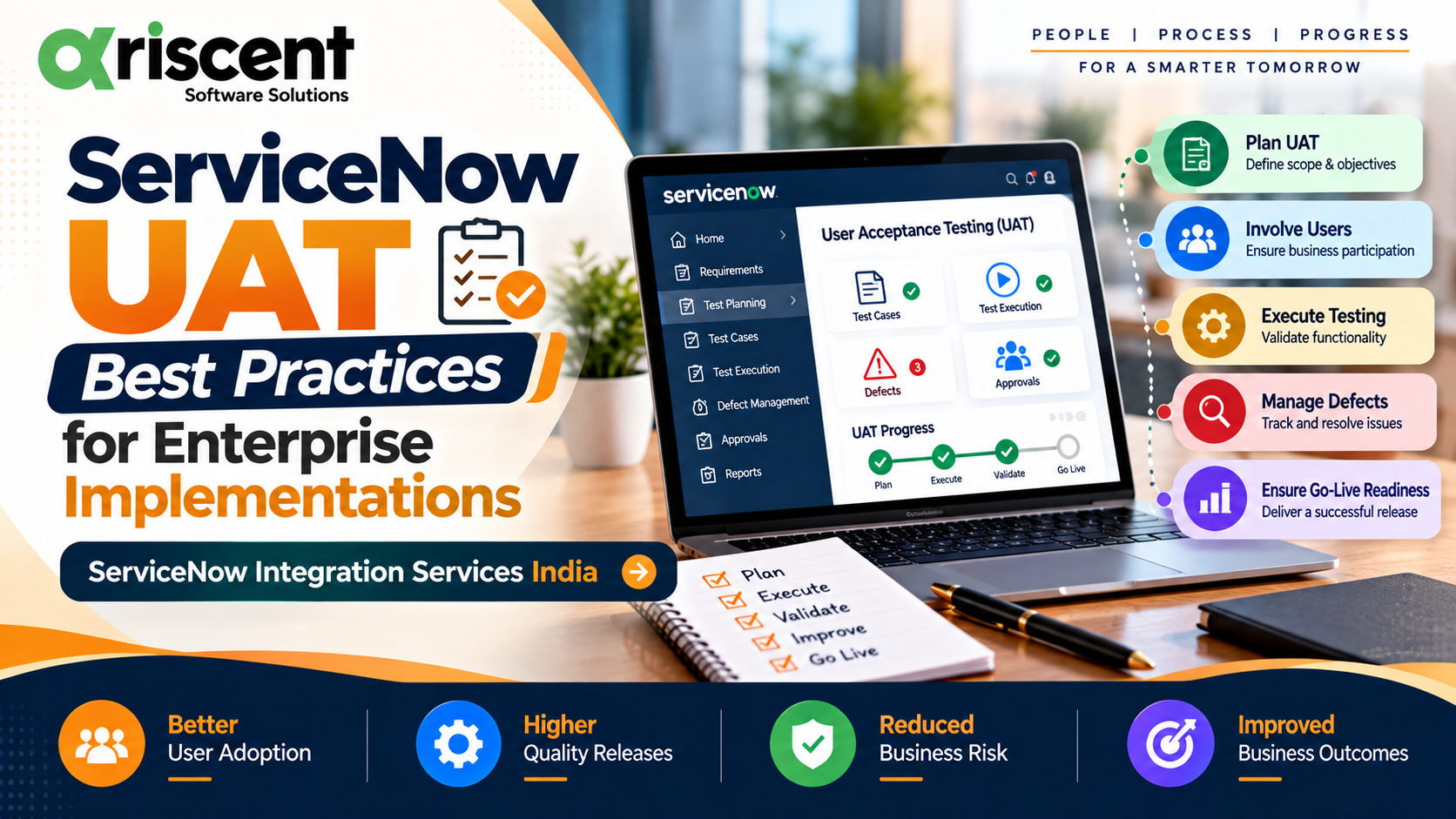
1. ServiceNow UAT Strategy for Successful ServiceNow Integration Services India
A successful ServiceNow UAT strategy ensures that integrations, workflows, configurations, and business processes perform as expected before production deployment. ServiceNow Integration Services India can support UAT by validating APIs, data flows, authentication, error handling, and system connectivity across integrated platforms. ServiceNow Managed Services can assist with test execution, defect tracking, regression testing, and post-UAT validation to ensure platform stability. ServiceNow Consulting helps define UAT objectives, business scenarios, test cases, acceptance criteria, and stakeholder responsibilities. Organizations should use realistic test data, prioritize critical business processes, document defects clearly, and conduct end-to-end testing across integrated applications. Regular communication between technical teams and business users helps resolve issues quickly. A structured UAT strategy improves integration reliability, reduces production risks, validates business requirements, and supports a smoother ServiceNow implementation.
2. How to Improve ServiceNow UAT with ServiceNow Integration Services India
Improving ServiceNow UAT requires structured planning, realistic test scenarios, effective defect management, and strong collaboration between technical and business teams. ServiceNow Integration Services India can help validate APIs, data exchanges, authentication, workflows, and connectivity between ServiceNow and external applications. For ServiceNow ITSM India, UAT should cover incidents, requests, changes, problems, approvals, SLAs, and other critical service processes to ensure they meet business requirements. ServiceNow Managed Services Hyderabad can support test execution, regression testing, defect resolution, performance validation, and post-UAT monitoring. Organizations should define clear acceptance criteria, use representative test data, prioritize high-impact scenarios, and document defects with detailed evidence. Regular stakeholder reviews and end-to-end testing help identify issues early. A well-structured UAT approach improves solution quality, reduces production risks, and supports smoother ServiceNow deployments.
3. ServiceNow UAT Testing Framework for ServiceNow Integration Services India
A ServiceNow UAT testing framework provides a structured approach to validating integrations, workflows, configurations, and business processes before production deployment. ServiceNow Integration Services India can support comprehensive testing of APIs, data exchanges, authentication, error handling, and connectivity with external applications. For ServiceNow ITOM Hyderabad, UAT should validate Discovery, CMDB updates, Service Mapping, Event Management, monitoring integrations, and operational workflows against defined requirements. ServiceNow Implementation Hyderabad teams can establish test scenarios, acceptance criteria, realistic test data, defect management processes, and stakeholder responsibilities. Organizations should prioritize critical business functions, conduct end-to-end and regression testing, document test results, and obtain formal business approval before deployment. A well-defined UAT framework helps identify issues early, improve integration reliability, reduce production risks, and ensure the ServiceNow solution meets operational and business expectations.
4. ServiceNow UAT Checklist for Enterprise ServiceNow Integration Services India
A ServiceNow UAT checklist helps enterprises validate integrations, workflows, configurations, data, and business processes before production deployment. ServiceNow Integration Services India can support testing of APIs, authentication, data synchronization, error handling, and connectivity with external applications. For ServiceNow ITSM India, the checklist should cover incidents, requests, changes, problems, approvals, SLAs, notifications, and workflow automation. ServiceNow ITOM India UAT should validate Discovery, CMDB updates, Service Mapping, Event Management, monitoring integrations, and operational workflows. Teams should verify test data, user roles, security controls, integration logs, performance, and error scenarios. Defects should be documented, prioritized, retested, and formally approved by business stakeholders. A comprehensive UAT checklist improves solution reliability, identifies issues before deployment, reduces production risks, and ensures ServiceNow functionality aligns with enterprise requirements.
5. ServiceNow UAT Execution Best Practices for ServiceNow Integration Services India
Effective ServiceNow UAT execution requires structured test planning, realistic scenarios, clear acceptance criteria, and active collaboration between business and technical teams. ServiceNow Integration Services India can support end-to-end validation of APIs, data flows, authentication, integrations, error handling, and system connectivity. ServiceNow Consulting Hyderabad helps define test strategies, prioritize critical scenarios, establish governance, and coordinate stakeholder participation throughout UAT. ServiceNow Implementation Hyderabad teams can manage test execution, defect tracking, regression testing, test evidence, and final business approvals. Organizations should use representative data, execute positive and negative test cases, document defects with sufficient details, and retest fixes before sign-off. Regular progress reviews help identify blockers early and maintain testing timelines. A disciplined UAT execution approach improves solution quality, reduces deployment risks, and ensures ServiceNow functionality meets business and operational requirements.
6. ServiceNow UAT Challenges and Solutions with ServiceNow Integration Services India
ServiceNow UAT can face challenges such as incomplete test scenarios, complex integrations, inconsistent test data, unclear acceptance criteria, and delayed defect resolution. ServiceNow Integration Services India can help validate APIs, data synchronization, authentication, error handling, and connectivity between ServiceNow and external applications. For ServiceNow ITOM, UAT should thoroughly test Discovery, CMDB updates, Service Mapping, Event Management, monitoring integrations, and operational workflows. ServiceNow Managed Services can support test execution, defect management, regression testing, performance validation, and post-deployment monitoring. Organizations should establish clear testing responsibilities, use realistic data, prioritize critical processes, and maintain detailed test documentation. Regular stakeholder reviews and structured defect tracking help resolve issues efficiently. A proactive UAT approach improves integration reliability, reduces production risks, and ensures ServiceNow functionality meets enterprise operational and business requirements.
7. ServiceNow UAT Automation Strategies for ServiceNow Integration Services India
ServiceNow UAT automation strategies help enterprises improve testing efficiency, consistency, and coverage across integrations and business workflows. ServiceNow Integration Services India can support automated validation of APIs, data synchronization, authentication, integration responses, and error-handling scenarios. For ServiceNow ITSM, automation can validate incidents, requests, changes, approvals, notifications, SLAs, and workflow execution across repeated test cycles. ServiceNow Managed Services can support automated regression testing, defect tracking, test maintenance, and ongoing validation after platform updates or integration changes. Organizations should identify high-volume and business-critical scenarios suitable for automation, establish reusable test cases, maintain reliable test data, and monitor automation results regularly. Combining automated and manual testing provides broader coverage while retaining human validation for complex business scenarios. A structured UAT automation approach reduces repetitive effort, improves test consistency, and supports smoother ServiceNow deployments.
8. ServiceNow UAT Validation and Testing with ServiceNow Integration Services India
ServiceNow UAT validation and testing ensure that integrations, workflows, configurations, and business processes meet defined requirements before production deployment. ServiceNow Integration Services India can support end-to-end validation of APIs, data exchanges, authentication, error handling, and connectivity with external applications. ServiceNow Managed Services can assist with test execution, regression testing, defect management, performance validation, and post-UAT monitoring. ServiceNow Consulting helps organizations define testing strategies, acceptance criteria, business scenarios, and stakeholder responsibilities. UAT teams should use realistic test data, validate positive and negative scenarios, verify security and user roles, and document test results and defects clearly. Regular stakeholder reviews and structured sign-off processes help confirm business readiness. A comprehensive validation approach identifies issues early, improves integration reliability, reduces production risks, and supports a stable ServiceNow implementation aligned with enterprise requirements.
9. ServiceNow UAT Governance Best Practices for ServiceNow Integration Services India
ServiceNow UAT governance establishes clear standards for planning, executing, reviewing, and approving testing activities before production deployment. ServiceNow Integration Services India can help define integration testing standards, validation procedures, defect management processes, and documentation requirements for connected applications. For ServiceNow ITSM India, governance should cover critical workflows, incidents, requests, changes, approvals, SLAs, and business process validation. ServiceNow Managed Services Hyderabad can support test coordination, regression testing, issue resolution, reporting, and post-deployment validation. Organizations should establish clear roles, acceptance criteria, test ownership, approval checkpoints, and escalation procedures. Regular governance reviews can help track test progress, identify risks, and ensure unresolved defects are addressed before sign-off. A structured UAT governance framework improves accountability, testing consistency, integration reliability, and deployment readiness while reducing operational risks during ServiceNow releases.
10. ServiceNow UAT Success Factors for ServiceNow Integration Services India
Successful ServiceNow UAT depends on clear requirements, realistic test scenarios, effective stakeholder participation, and structured defect management. ServiceNow Integration Services India can support end-to-end validation of APIs, data synchronization, authentication, error handling, and connectivity with external systems. For ServiceNow ITOM, UAT should validate Discovery, CMDB updates, Service Mapping, Event Management, monitoring integrations, and operational workflows against defined acceptance criteria. ServiceNow Managed Services can assist with test planning, regression testing, defect resolution, performance validation, and post-deployment monitoring. Organizations should use representative test data, prioritize business-critical scenarios, document test evidence, and establish clear sign-off procedures. Regular communication between technical and business teams helps identify issues early and accelerate resolution. These success factors improve testing quality, reduce production risks, strengthen integration reliability, and support a smoother ServiceNow deployment.