
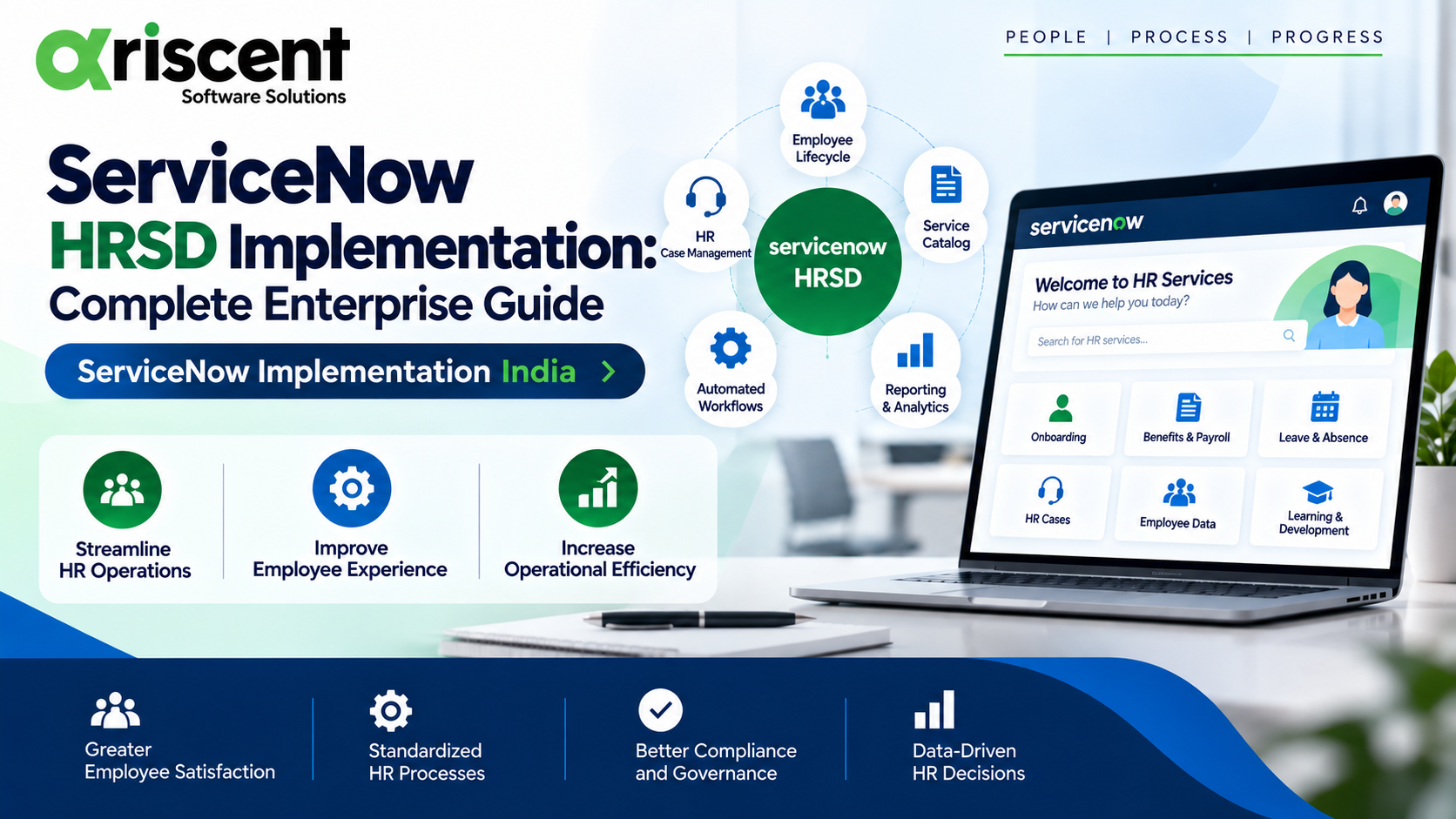
1. ServiceNow HRSD Implementation Best Practices for ServiceNow Implementation India
ServiceNow HRSD implementation requires careful planning, process alignment, and integration with existing enterprise systems. During ServiceNow Implementation India, organizations should define clear HR processes, configure employee services, establish appropriate roles, and prioritize a user-friendly employee experience. Integration with ServiceNow ITSM can help connect HR and IT processes for activities such as employee onboarding, access requests, incidents, and service fulfillment. ServiceNow ITOM can complement enterprise operations by providing infrastructure visibility and supporting dependencies that impact employee-facing services. Organizations should also focus on data security, role-based access, workflow automation, knowledge management, reporting, and governance. Before deployment, teams should conduct thorough testing, user acceptance validation, and training. A phased implementation approach helps reduce risks, improve adoption, and create a scalable HR service management environment aligned with enterprise requirements.
2. How ServiceNow HRSD Supports ServiceNow Implementation India
ServiceNow HRSD helps organizations modernize employee services by centralizing HR processes, automating workflows, and improving employee experiences. During ServiceNow Implementation India, HRSD can streamline processes such as employee onboarding, lifecycle events, case management, document management, and employee requests. Integration with other ServiceNow capabilities can create connected workflows across HR, IT, and business functions. With ServiceNow Managed Services, organizations can monitor HRSD performance, manage enhancements, support users, and continuously optimize workflows after implementation. ServiceNow Consulting can help enterprises define HR service strategies, configure modules, design integrations, establish security controls, and align the platform with organizational requirements. Organizations should also prioritize data privacy, role-based access, knowledge management, reporting, testing, and user adoption. A structured HRSD approach supports scalable, efficient, and consistent employee service delivery.
3. ServiceNow HRSD Implementation Strategy for Enterprises in India
A successful HRSD strategy requires clear objectives, process standardization, and alignment with enterprise requirements. During ServiceNow Implementation India, organizations should assess existing HR processes, define employee service requirements, configure HR case management, automate workflows, and establish appropriate roles and access controls. Integration with ServiceNow ITOM India can support connected operations by providing visibility into infrastructure and services that may affect employee-facing applications. With ServiceNow Managed Services India, enterprises can receive ongoing platform support, performance monitoring, workflow optimization, and continuous enhancements after implementation. Organizations should also prioritize data privacy, knowledge management, reporting, integrations, testing, and user adoption. A phased implementation approach can help enterprises validate configurations, manage change effectively, and reduce operational risks. This strategy enables organizations to build scalable HR services while supporting consistent employee experiences.
4. ServiceNow HRSD Implementation: A Practical Guide for ServiceNow Implementation India
A practical HRSD implementation begins with understanding business requirements, existing HR processes, and employee service expectations. During ServiceNow Implementation India, organizations can configure HR case management, employee workflows, knowledge bases, lifecycle events, and service delivery processes based on their needs. Integration with ServiceNow ITSM Hyderabad can connect HR and IT processes for employee onboarding, access requests, incidents, and service fulfillment. ServiceNow ITOM Hyderabad can provide broader operational visibility for infrastructure and services supporting employee-facing applications. Organizations should also focus on data security, role-based access, workflow automation, reporting, integrations, testing, and user training. A phased implementation approach allows teams to validate configurations, address process gaps, and manage organizational change effectively. With proper planning and governance, HRSD can support scalable and consistent employee service delivery across enterprise operations.
5. Planning a Successful ServiceNow HRSD Implementation in India
Planning a successful HRSD implementation requires clear objectives, process assessment, and alignment with employee service requirements. During ServiceNow Implementation India, organizations should define HR workflows, configure case management, establish employee service portals, and automate repetitive processes. With ServiceNow Managed Services Hyderabad, enterprises can receive ongoing platform support, performance monitoring, workflow optimization, and post-implementation enhancements. ServiceNow Integration Services Hyderabad can connect HRSD with payroll, identity management, enterprise applications, and other business systems to create seamless employee workflows. Organizations should also prioritize data privacy, role-based access, security, knowledge management, reporting, testing, and user training. A phased implementation approach helps validate configurations, identify process gaps, and manage organizational change. Proper governance and continuous improvement can help enterprises build scalable HR services and deliver consistent employee experiences across departments.
6. ServiceNow HRSD Features and Benefits for ServiceNow Implementation India
ServiceNow HRSD provides features that help enterprises streamline HR processes, automate employee services, and improve service delivery. During ServiceNow Implementation India, organizations can use HR case management, employee service centers, knowledge management, lifecycle events, document management, and workflow automation to create consistent HR experiences. Integration with ServiceNow ITSM can connect HR and IT processes for onboarding, access requests, incidents, and employee support. ServiceNow ITOM can provide operational visibility into infrastructure and services supporting employee-facing applications. HRSD also supports reporting, self-service, role-based access, and process standardization. Organizations should consider data security, integrations, governance, testing, and user adoption when implementing these capabilities. By combining HR automation with broader ServiceNow capabilities, enterprises can improve process efficiency, reduce manual work, and deliver scalable employee services across departments.
7. How to Plan ServiceNow HRSD for Successful ServiceNow Implementation India
Planning HRSD effectively requires clear business objectives, process assessment, and alignment with employee service requirements. During ServiceNow Implementation India, organizations should identify key HR processes, define service delivery models, configure HR case management, and establish workflows for employee lifecycle events. ServiceNow Managed Services can provide ongoing platform support, performance monitoring, workflow optimization, and continuous improvements after implementation. ServiceNow Consulting can help enterprises develop an implementation roadmap, design integrations, configure security and roles, and align HRSD capabilities with organizational requirements. Organizations should also consider data privacy, knowledge management, reporting, testing, user training, and change management. A phased implementation approach allows teams to validate configurations, address process gaps, and manage deployment risks. Proper governance and continuous optimization can help enterprises build scalable HR services and improve employee experience.
8. ServiceNow HRSD Integration and Automation for ServiceNow Implementation India
ServiceNow HRSD integration and automation can help enterprises streamline employee services, reduce manual tasks, and connect HR processes with broader IT operations. During ServiceNow Implementation India, organizations can automate onboarding, employee requests, case assignments, approvals, notifications, and lifecycle events. Integration with ServiceNow ITOM India can provide visibility into infrastructure and services supporting employee-facing applications, helping coordinate HR and IT operations. With ServiceNow Managed Services India, organizations can monitor integrations, maintain automated workflows, resolve issues, and continuously optimize platform performance. Successful implementation should include secure integrations, data validation, role-based access, governance, testing, and monitoring. Enterprises should also evaluate existing HR processes and identify automation opportunities before deployment. A structured integration strategy enables scalable workflows, improves operational efficiency, and supports consistent employee service delivery across the organization.
9. ServiceNow HRSD Implementation: Modules, Workflows and Best Practices
ServiceNow HRSD provides modules and workflows that help organizations streamline employee services, automate HR processes, and improve service delivery. During ServiceNow Implementation India, enterprises can configure HR case management, employee service centers, knowledge management, lifecycle events, document management, and HR workflows based on business requirements. With ServiceNow Managed Services Hyderabad, organizations can monitor platform performance, manage enhancements, optimize workflows, and provide ongoing support after implementation. ServiceNow Integration Services Hyderabad can connect HRSD with payroll, identity management, IT systems, and other enterprise applications to enable seamless data exchange and automated processes. Best practices include defining clear requirements, applying role-based access, protecting employee data, testing workflows, establishing governance, and training users. A structured approach helps enterprises build scalable HR operations and deliver consistent employee experiences.
10. A Complete Enterprise Guide to ServiceNow HRSD Implementation India
A successful HRSD implementation requires a structured approach covering business requirements, process design, configuration, integration, testing, and adoption. During ServiceNow Implementation India, enterprises can implement HR case management, employee service centers, knowledge management, lifecycle events, and automated workflows to streamline HR operations. With ServiceNow Managed Services Hyderabad, organizations can receive ongoing platform support, performance monitoring, workflow optimization, and continuous enhancements after deployment. ServiceNow Consulting India can help enterprises define implementation roadmaps, design integrations, configure security controls, establish governance, and align HRSD capabilities with business objectives. Organizations should also prioritize employee data protection, role-based access, testing, reporting, training, and change management. A phased implementation strategy helps reduce risks, improve adoption, and create scalable HR services that support consistent employee experiences across enterprise operations.